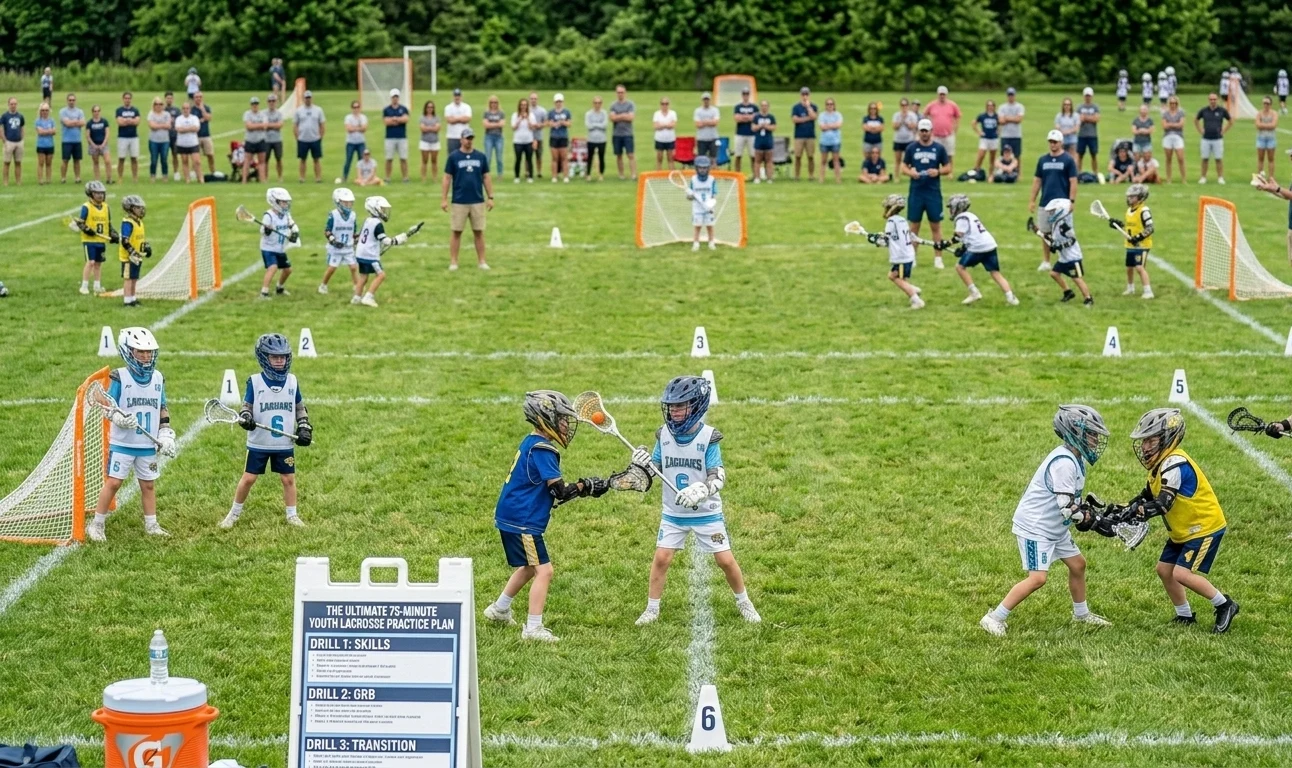
How to Build Efficient Practices that Teach Players How to Play, Not Just What to Play
Why Efficiency Matters in Youth Lacrosse
Youth practices are often filled with long lines, static drills, and too much instruction — not enough learning through play. The best coaches know that players don’t develop by memorizing plays, but by perceiving, deciding, and acting in game-like situations.
Building an efficient, 90-minute practice doesn’t mean cutting corners — it means designing an environment that maximizes touches, decisions, and fun. When we shift from “running drills” to “designing experiences,” players not only improve faster but also love coming to practice.
Key Principles of an Efficient Practice
- Have a focused practice: Create a theme for practice that you want the team to work on
- Some good ideas are “Small Sided Game Rodeo”, “Foundational Skillsets”, “Transition Offense+Defense”
-
Repetition Without Repetition: Create variability — small-sided games, new angles, and modified spaces — so players adapt, not just repeat.
- If players ate doing a shooting drill, make every shot they take a different release angle or spot on the field”
-
Perception-Action Coupling: Encourage reading defenders, scanning for teammates, and reacting under real pressure.
- For younger players, giving the offense a 1 person advantage at all times will help elevate this!
-
Constraint-Led Coaching: Adjust rules, space, or scoring to emphasize the behaviors you want.
- as an example, If the game is too easy for the offense, make the playing space smaller
-
Economy of Time: Keep transitions tight and players active — 80%+ of practice should be movement.
- Stations and small sided games will keep them playing!
-
Fun & Freedom: Joy drives engagement; engagement drives learning.
- The #1 goal for youth lacrosse, is making sure the kids are engaged and are excited for the next practice
Coaching Checklist for Efficient Practices
✅ Try to keep every player active
✅ Every activity has clear purpose linked to game play
✅ Use time blocks but allow in more time if you need when working through problem solving
✅ End with something competitive and fun
✅ Allow mistakes — they’re part of learning
Practice Framework – Todays Theme: Small Area Decision Making Games
- Start with a drill or game that emphasizes movement, decision making, and allows to create maximum participation and all players being active!
- Example: Chaos Keep Away: https://lacrossedrive.com/chaos-keep-away-game/
- Put in Small Area Games or Drills That continue stick work while adding in some game-like environment
- Example: Diamond Keep Away to the Goal: https://lacrossedrive.com/diamond-keep-away-to-the-goal/
- Positional SkillSet Stations
- Defense 4 Corner Approach: 4-corner-approach-drill
- Offense Step Down and Alley Shots: https://lacrossedrive.com/step-downs-and-alley-shots/
- Small Area Game that gets them competing and thinking about finding quick advantages in transition
- 43 Blast Game: https://lacrossedrive.com/43-blast-small-sided-game/
- Finish with a Scrimmage-Like Drill that adds in all phases (Offense, Defense, Transition, and Clearing)
- Scoop and Chase Game: https://lacrossedrive.com/scoop-and-chase-small-sided-game/
Closing Thought
Youth lacrosse isn’t about who wins weekend tournaments — it’s about teaching kids to love the game and think for themselves. When practices are efficient, dynamic, and fun, players leave the field better than they arrived — as athletes, teammates, and decision-makers.