A fun game to start thinking about moving off ball and actions after a player passes the ball
Set Up
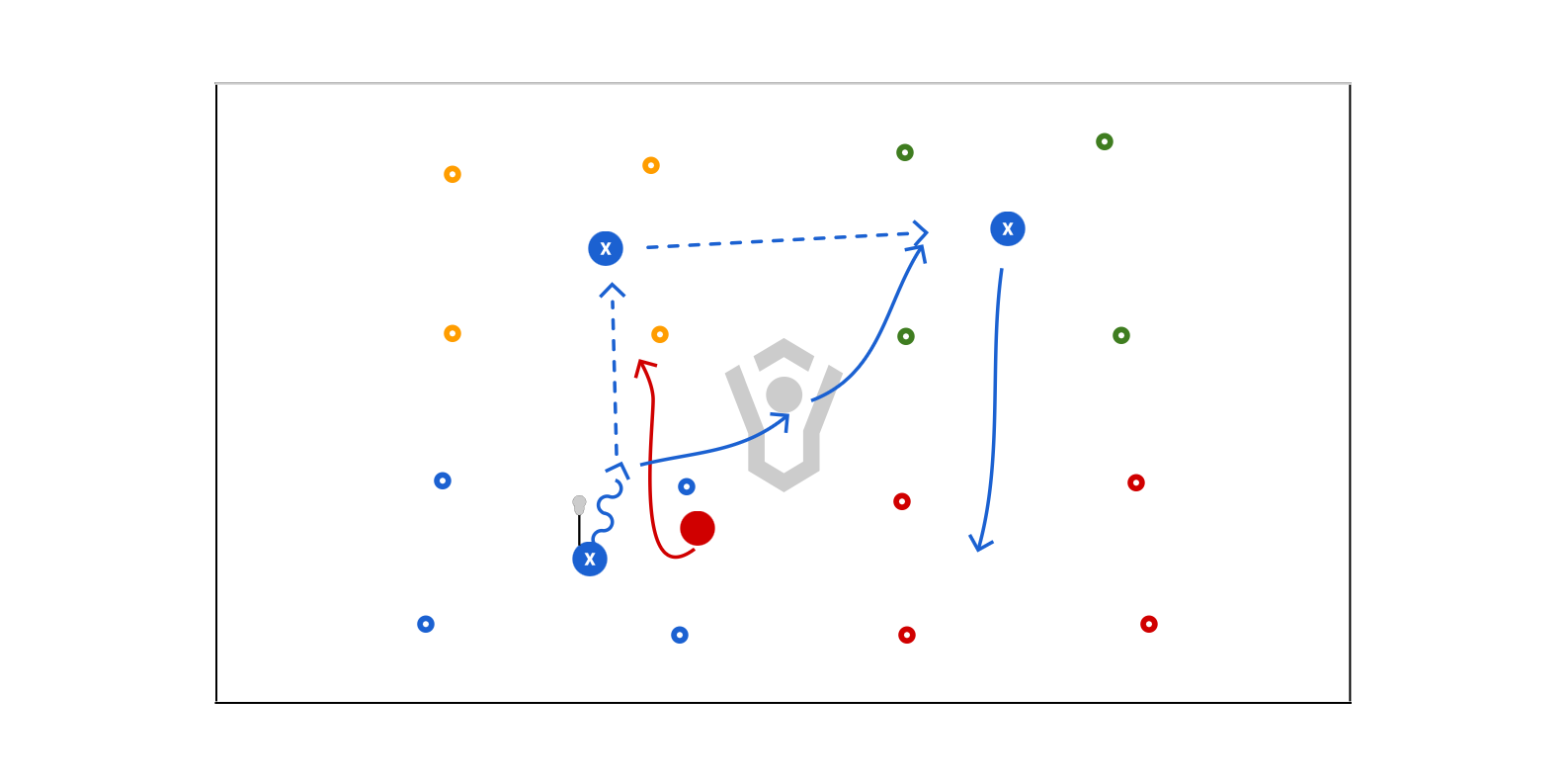
Put players in Groups of 3–4 around the field within a grid like format using cones. One ball per group. Add 1 “chaser” who tries to tag the ball carrier (no stick needed for chaser). Group passes the ball around to keep it away from the chaser. THE MOMENT you pass, you MUST immediately run at least 5 yards to a new spot before you can receive again. No clustering. No standing next to your passer waiting for a return pass, your teammate mu run towards you to get their hands free. Players can’t run to the same safe zone they just left
By forcing movement after every pass, kids begin to experience that passing creates opportunity for THEMSELVES, the passer moves into space that opens up once the defender follows the ball. This is the foundation of give-and-go without naming the concept.
Coaching Points & Principles
Progressions
- Make the grid bigger for easier space
- add another chaser
|
|
- Players always moving after every pass
- If tagged, players switch roles
|
A good drill to work on passing at this age and the idea of always moving.
Set Up
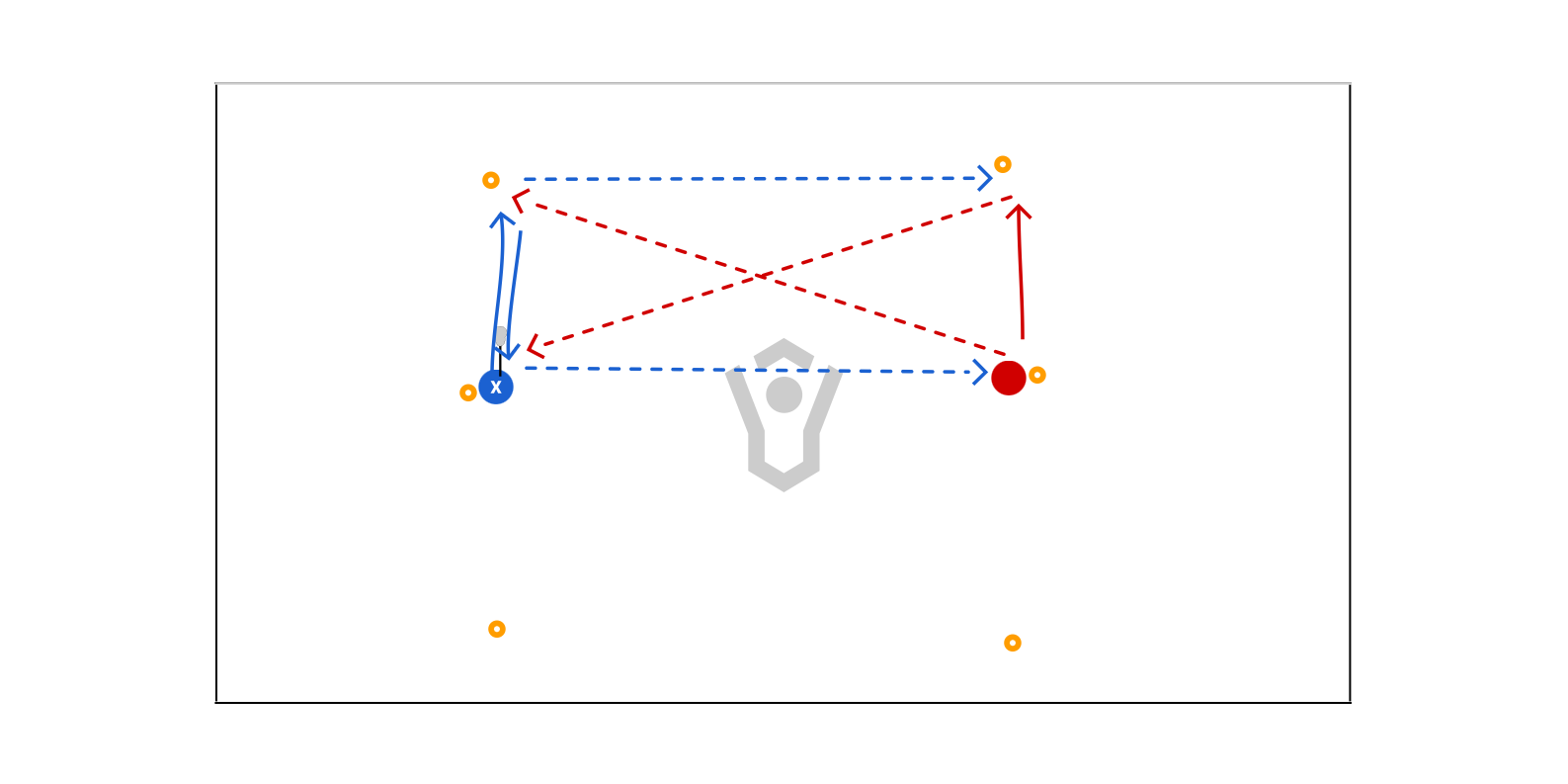
Put player in groups of 6 around the field, 2 players will go at a time. The group will have 3 cones on each side, that are 10 yards apart each. Player A is the initiator andstarts with the ball, and make a pass to teammate directly across. Player A will spring to either side cone of theirs, and try to get a pass back while running, like a give and Go. Player B will then spring to mirror their teammate, so they can make another pass across, and then player A will spring back to the middle cone catching the ball on the run again. Flip roles, and once both players have gone wing to wing, rotate players (each group should be about 1-2 minutes)
Coaching Points & Principles
Progressions
- Put a defender in the middle, as a token defender, so each player needs to move to get open
- Cones further apart, more running
|
|
- Catching the ball on the run (like a give and go).. players should always keep their stick UP as a target when moving off ball
- Passing and Catching – Make sure the kids are doing the right passing and catching concepts (good target passes around teammates head / choking up to control the catch, etc..)
|
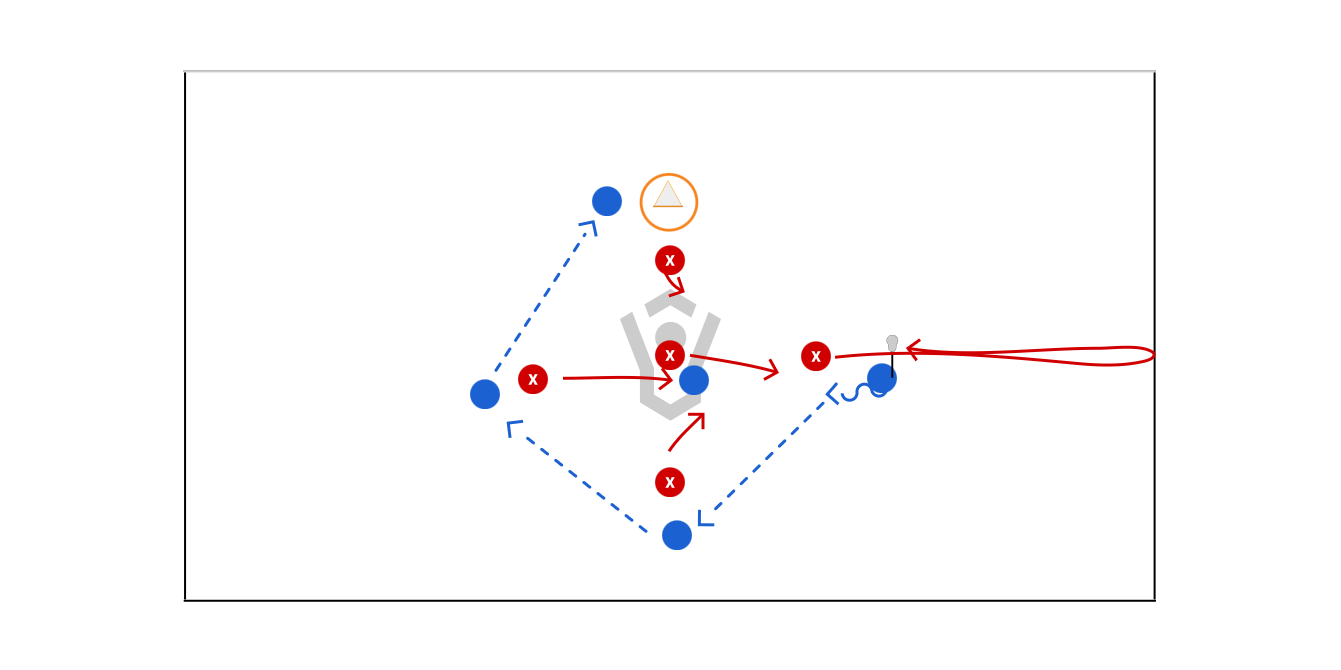
Add in bonus points for the offense, if they score off a give and GO. Compete and play a point system and see if players can naturally find the solutions. Here is an example
Offense: 1 Point for a goal, 2 points for a give and go goal
Defense: 1 Point for a save, 2 points for an added completed clear after the save
|
|
- Offense – read the slides, move the ball to pressure
- Defense – Slide, Recover, Communicate
|
A fast paced, half field drill to get your players competing.
Set Up
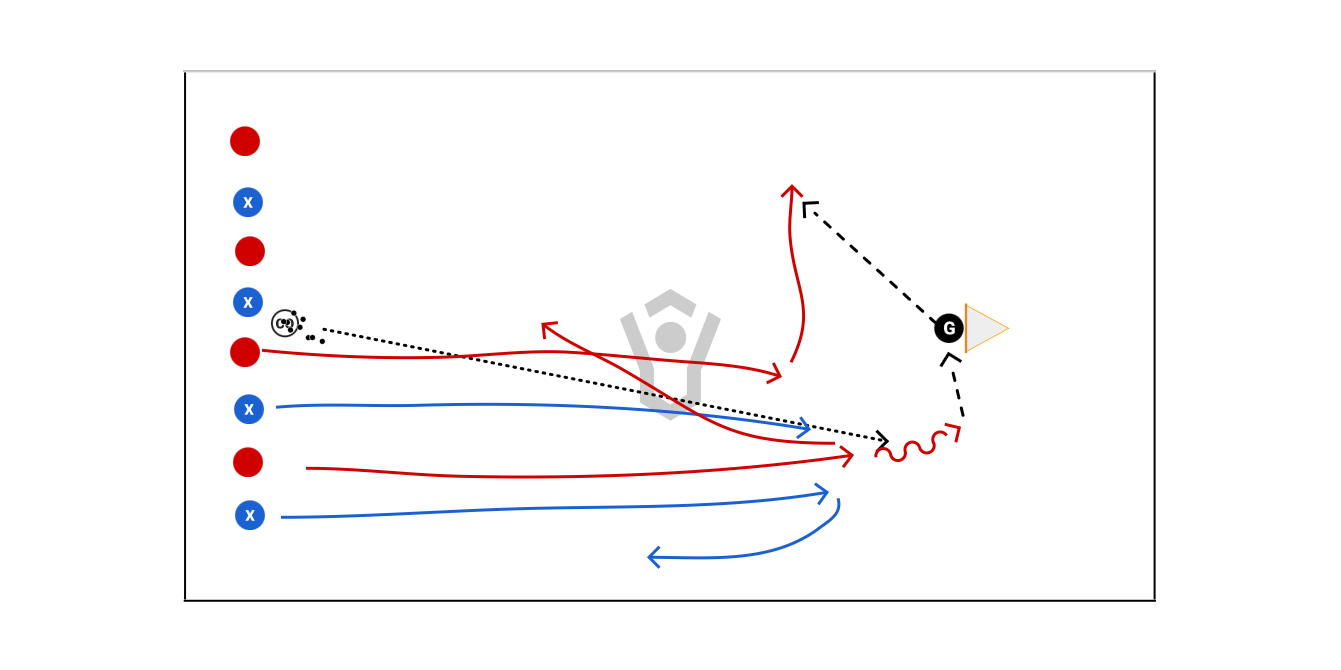
Split the group into two teams, and put them in alternating lines at the midfield. On a Half field, we would have 4-6 lines of each color, being a full team drill. If working in smaller spaces like video, you can do 3-4 of each color. The drill starts with coach rolling a live ground ball into the play. The first player in each line will go try to win the ground ball. Which ever team wins the ball, gets the ball to the goalie and initiates a clear. If you don’t have a goalie, just have the players clear to a Coach up top. Once they successfully clear the ball, they will go back in on offense, and attack the goal. Coaches can manipulate the rules or constraints to make uneven situations or get players to explore other team concepts like picks, off ball play, etc..
Coaching Points and Principles
Progressions
- Add extra players in on offense to creat uneven looks
- Number the lines up top, so only select players go into the drill (1,2,3,4 would be a 2v2 groundball play)
- Shot Clock – Once on offense, create a shot clock to speed up play
|
|
- Ground balls – players should be working hard to win ground balls to start the drill
- Clearing – Team is spread out and finding open spaces
- Even & Uneven scenarios
|