A fun game to start practice with!
Set Up
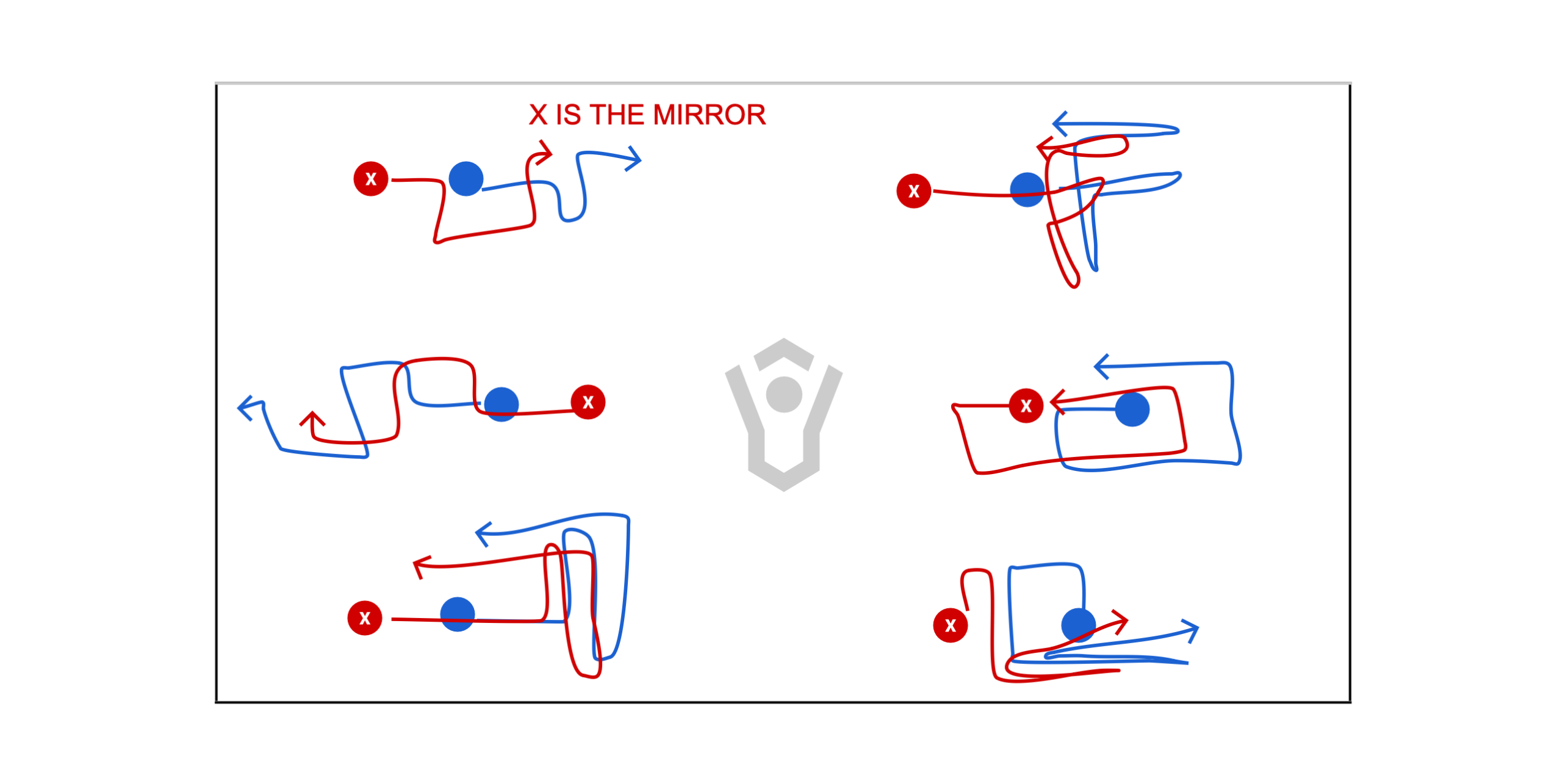
Scatter pairs across open space. No sticks needed. One player is the “Leader,” one is the “Mirror.” Partners face each other about 4 feet apart. The Leader moves, side to side, forward, backward, changes speed, and the Mirror must copy them and stay 4 feet away at all times. Switch leader every 45 seconds.
Coaching Points & Principles
|
|
- Leader tries to “shake” the mirror (make them lose the distance or direction).
- Mirror scores a point for each 5-second stretch they stay perfectly matched.
- Why no sticks? We want pure body-reading here. Kids are learning to watch hips and shoulders, the cues defenders give before they commit. This directly transfers to drawing a defender
|
Set Up
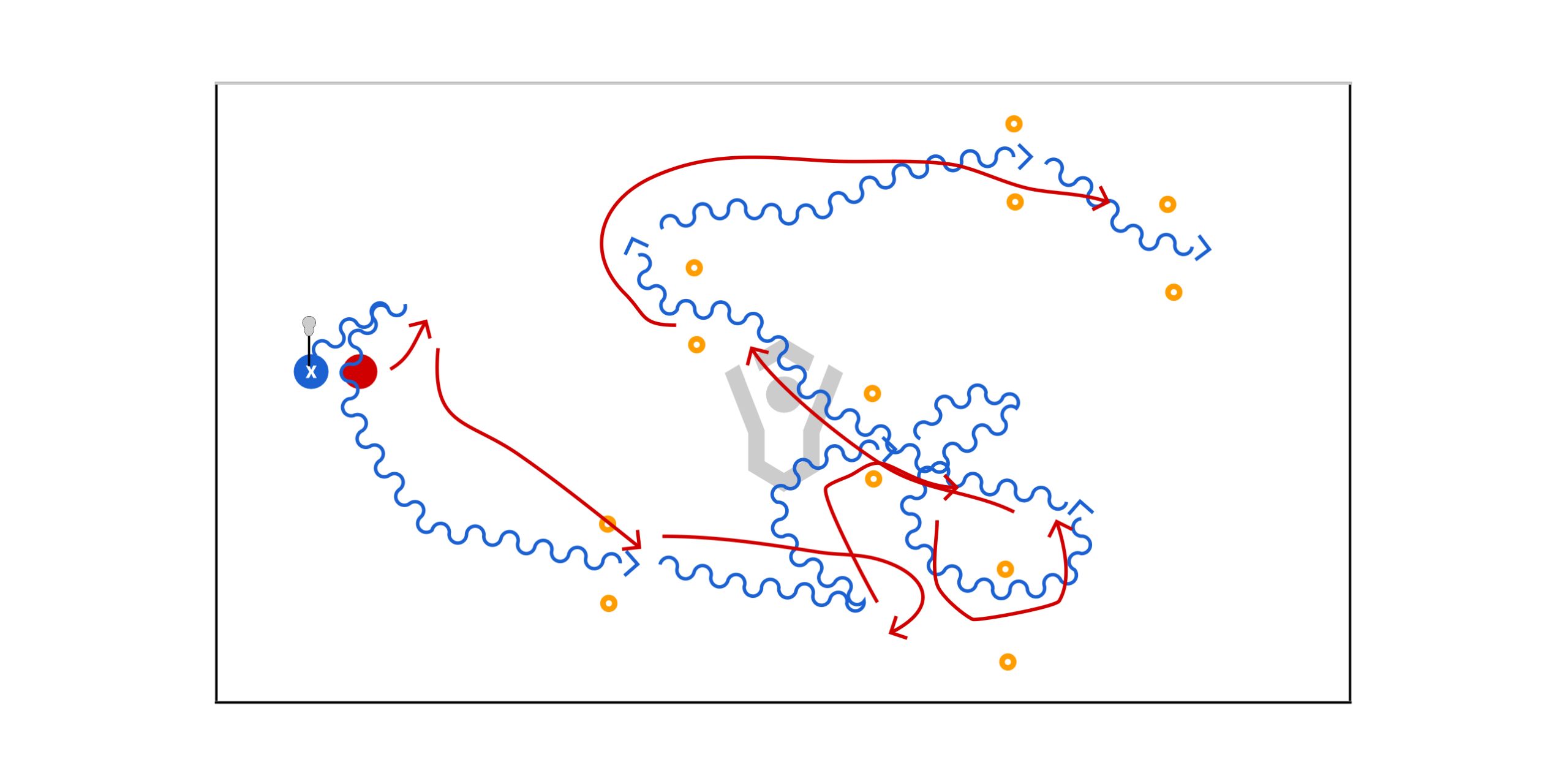
Create a 20×20 yd playing area. Place 6 small gates around the grid (each gate = 2 cones set 4 ft apart). One attacker with ball, one defender guarding. Attacker’s goal: Run and Cradle THROUGH as many gates as possible in 60 seconds. Defender tries to intercept the carrier between gates. Scoring: 1 point per gate passed through. Let each group run 2 rounds, and then switch. The offensive player must maintain possession running through a gate, no drops and they CANNOT use the same gate twice in a row
Coaching Points & Principles
Progressions
- Have the defender play with no stick
- Remove some gates, less options
|
|
- The gates are scattered randomly. The attacker must constantly scan, evaluate multiple options, and redirect
- The defender must make decisions about which gate to guard, and the attacker can exploit whatever the defender abandons.
- No specific path, no lines. Continuous decision-making.
|
Set Up
Start the players on the wing, with a ball in their stick. Add a coach or player about a stick length away or in light contact (shown here) acting as a guided defender. The player with ball will initiate with a bounce.. they step away from the defender, to create space. The guided defender will do 1 of 3 things: Take a high approach, a low approach, or stay neutral. The player with the ball will read the defender, and take the space given. If the defender stays neutral, the player with ball should initiate some form of deception like a fake pass, or a hitch to freeze and attack the space they want.
Principles and Coaching Point
Progressions
- Start with a dodge up the hash
- Play tougher defender forcing a double dodge
|
|
- Take the space the defender gives, and explode to it
- When bouncing, get your stick in a loaded/PROTECTED position acting as a triple threat (You can pass, shoot, or re-attack)
- Get your Hands free for a hard shot
|
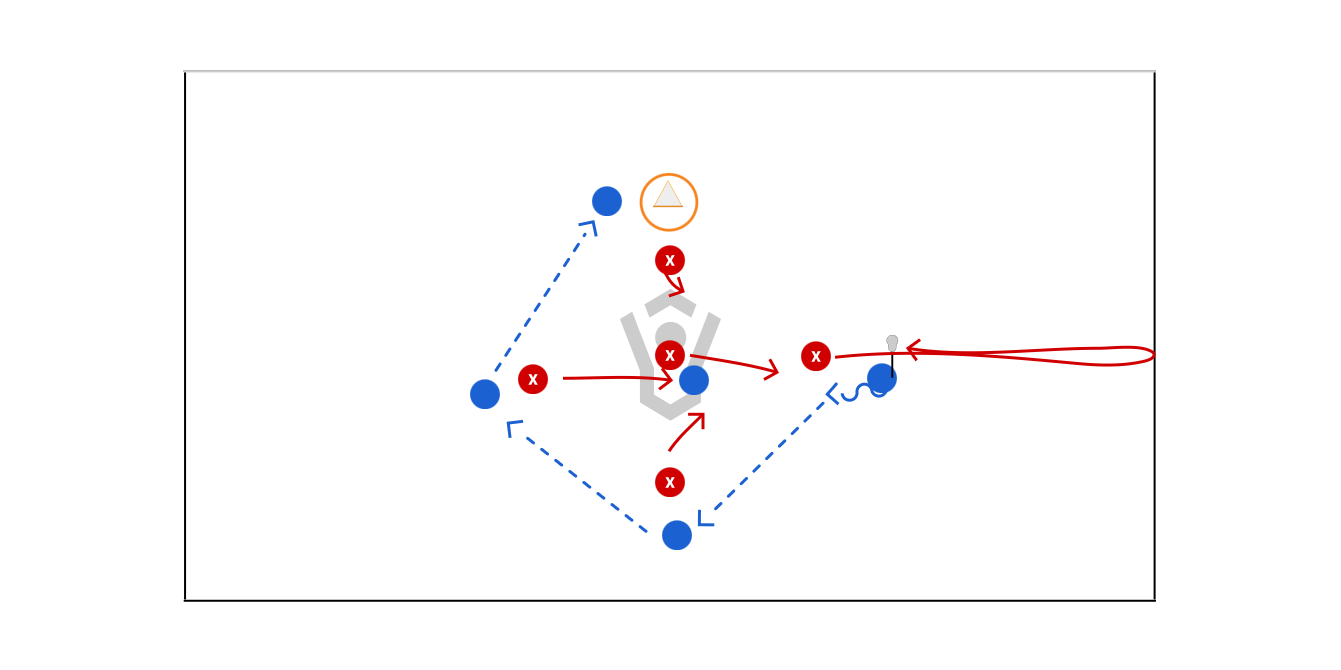
Modify this 4v4 drill to 3v3.. start the players in a triangle, and then decide which defender leaves and slides
|
|
- Offense – read the slides, move the ball to pressure
- Defense – Slide, Recover, Communicate
|
A fast paced, half field drill to get your players competing.
Set Up
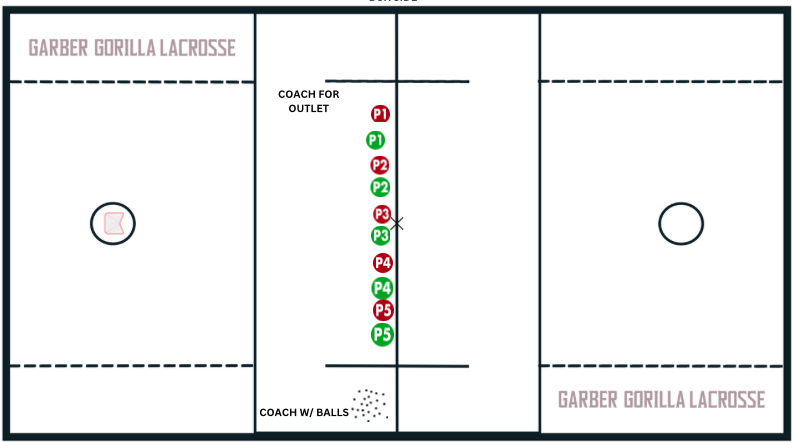
Split the group into two teams, and put them in alternating lines at the midfield. On a Half field, we would have 4-6 lines of each color, being a full team drill. If working in smaller spaces like video, you can do 3-4 of each color. The drill starts with coach rolling a live ground ball into the play. The first player in each line will go try to win the ground ball. Which ever team wins the ball, gets the ball to the goalie and initiates a clear. If you don’t have a goalie, just have the players clear to a Coach up top. Once they successfully clear the ball, they will go back in on offense, and attack the goal. Coaches can manipulate the rules or constraints to make uneven situations or get players to explore other team concepts like picks, off ball play, etc..
Coaching Points and Principles
Progressions
- Add extra players in on offense to creat uneven looks
- Number the lines up top, so only select players go into the drill (1,2,3,4 would be a 2v2 groundball play)
- Shot Clock – Once on offense, create a shot clock to speed up play
|
|
- Ground balls – players should be working hard to win ground balls to start the drill
- Clearing – Team is spread out and finding open spaces
- Even & Uneven scenarios
|