💥 10 Essential Lacrosse Drills for “Sixes” Play
Sixes lacrosse is built around pace, transition, spacing, decision-making, and two-way play. Because of the smaller roster sizes, quicker restarts, shorter shot clock, and constant movement, players must learn to make decisions under pressure while playing both offense and defense.
The best drills that reflect sixes style play are:
- Fast-paced
- Representative of game situations
- Built around small-sided play
- Focused on decision-making over memorization
- Adaptable for multiple age groups
🎯 Core “Sixes” Principles to Reinforce in Every Drill
- Play Fast, But Under Control – Players should learn to recognize when to attack quickly and when to move the defense first.
- Everyone Plays Both Ways – Sixes rewards complete lacrosse players who can defend, transition, communicate, and make decisions.
- Space Creates Advantages – Good spacing is often more important than complex schemes.
- Decision-Making Over Memorization – Players should learn principles and solutions rather than running robotic systems.
- Small-Sided Games Transfer Best – The more representative the drill feels to real play, the better the learning transfer.
👇 The drills below are designed to work for both youth and high school players by adjusting, adding or removing constraints like field size, number of players, even/uneven, and overall speed.
3v2 to 2v1
A fun small area transition game that gets everyone playing offense and defense
Set Up
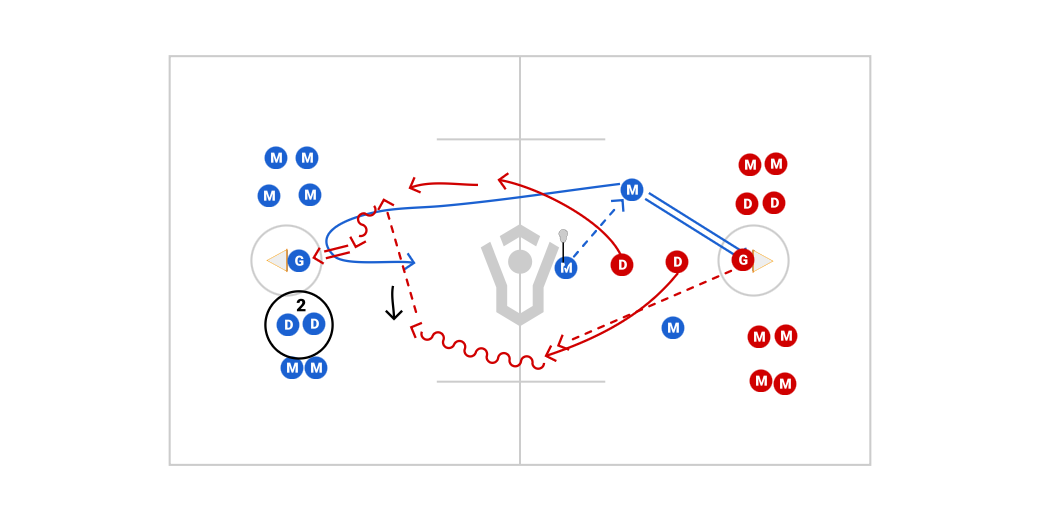
Create a small area field (30×35) , and split your players into 2 teams. Start with a 3v2 on 1 side of the field. Once the play ends or a turnover, the last player to touch the ball on offense needs to spring back on defense. The 2 defenders just in, transition back the other way and play 2v1. Once that ends, start a 3v2 the other direction and repeat
Coaching Points & Principles
- Transition – Play fast
- Early offense
- Find the advantages
- Communication
Progressions
- For youngest players, start with a 4v2 or shorten the field
- Add in more constraints like a shot clock
- Play all with weak hands
4v4 Continuous Game
A fun way to play small area game and developing offensive and defensive game IQ
Set Up
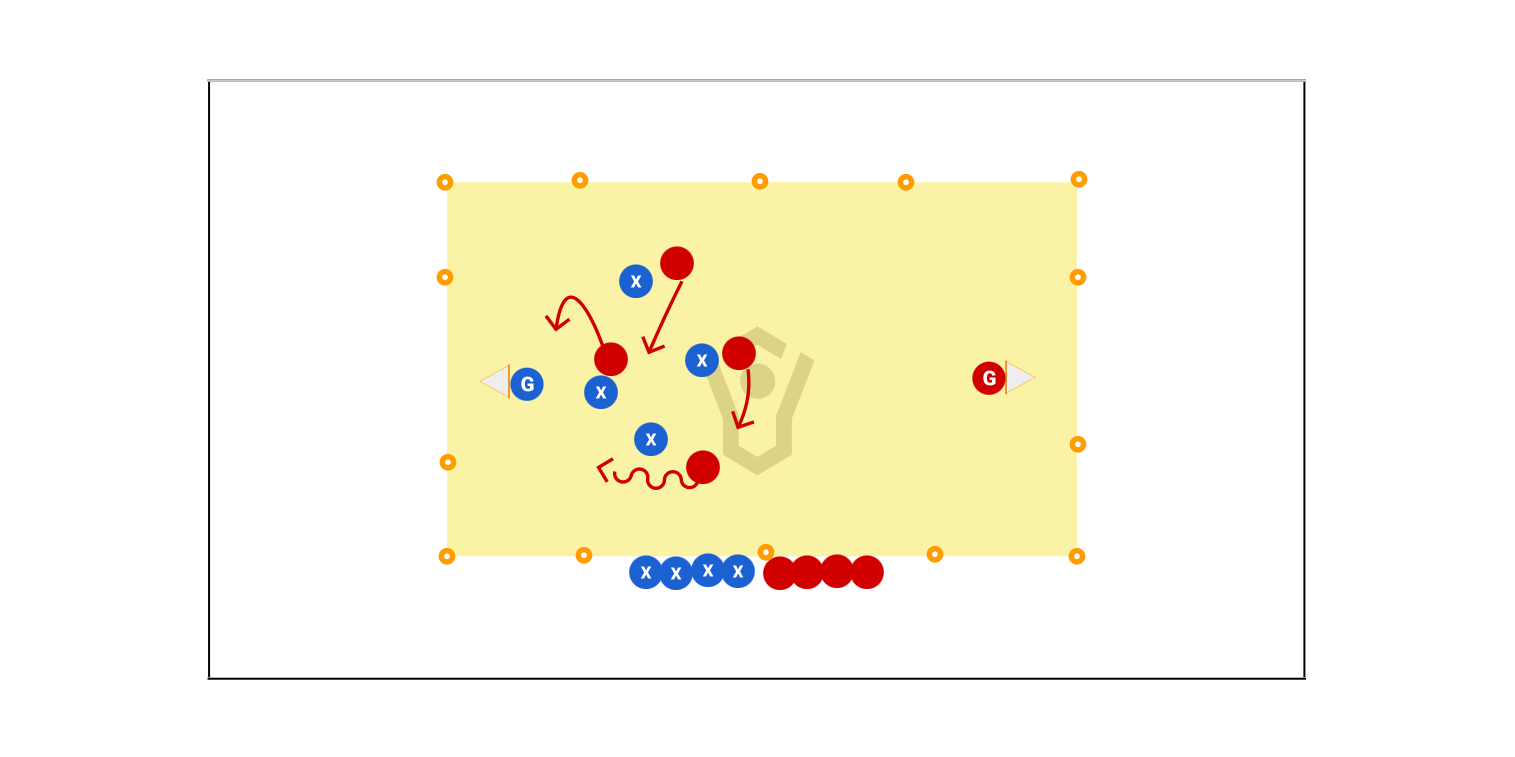
Create a small playing area (30×35) and split your players up into 2 teams. Line them up on the sideline. We are going to play a 4v4 game with some added constraints to build in game awareness
- 8 Seconds to Clear / 10 Seconds to get a shot off once over midfield
- Sub on the fly – No Horns – Forces players to know how and when to sub off
Optional Added Constraints
- Initiate every offense with an on or off ball pick
- 2x Points if players score off ball from a pass, pick, or quick stick
Coaching Points and Principles
- Spacing – Transition spacing and riding gapes to move the ball up the field quickly
- Subbing – Try to sub in a strategic way so you aren’t playing with a disadvantage’
- Maintain gaps and coding spaces with shallow cuts and picks
Progressions
- Play 5v4 for the youngest players so there is always an advantage – Keep an extra offensive player in at all times but the goalie can not clear it full field to them.. the team must clear the ball first
Shot Clock Game
A small area game that works or urgency and quick play
Set Up
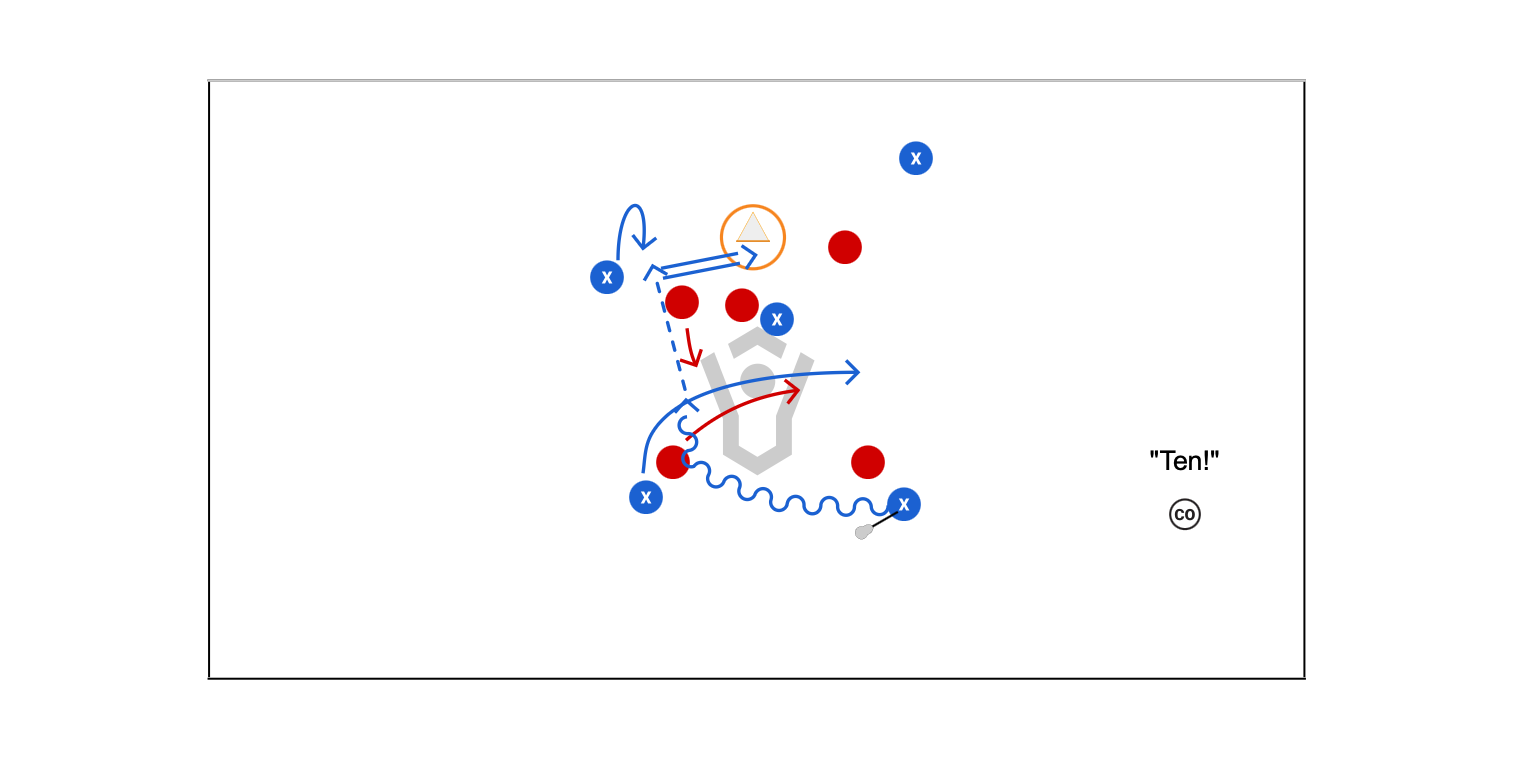
On one half the field, play a 5v5 game. The offense will move the ball around and randomly the coach will yell time left on the clock, like “Ten!”. The offense now has 10 seconds to find a way to create offense and a scoring opportunity before the 10 seconds expires
Coaching Points & Principles
- Thinking 1 step ahead – players on field should be thinking about where they are on the field before the clock time arrives, think move and play to space
- Urgency – Don’t panic, and find the best spot where the advantage may be
- If the player has it at X, and 8 seconds left, pass to the wing and dodge there, as an example
Progressions
- Youngest players, play 4v3 so there is always an advantage
- Make shot clocks longer as well
- Play 4v4 or full squad
Restart Game
A game that forces the offense to find quick advantages off restarts and the defense to communicate and get into proper positioning
Set Up
On half field, play 4v4. Give the offense a 15 second shot clock. Play until one of the following happens
- Shot/Goal
- Goalie Save/Def Clear
- Defensive Clear
Once one of this has happened, coach blows the whistle and rolls a new ball in to the offense into a random area. The Defense must get back into the house/hole area to protect the goal, and the offense must move quick to find scoring opportunities.
Coaching Points & Principles
- Fast restart – Offense should try and take advantage of a defense that is spread out, and attack open space to get them to slide/rotate
- Defensive communication – Off restarts, they need to match up and make sure they are supporting for help/slides
- Play 4v3 for the youngest players so there is always an advantage
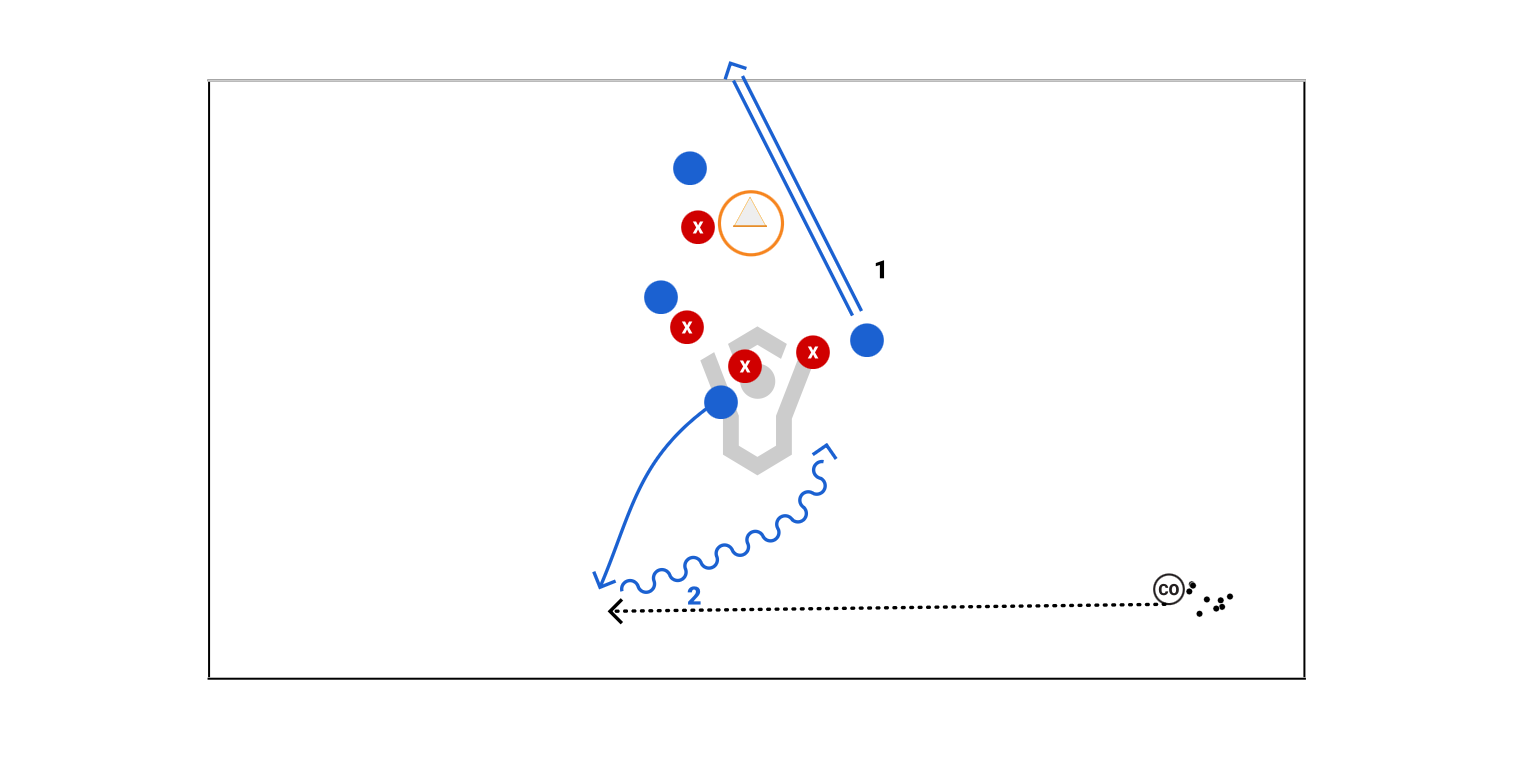
Continuous 2v2 Game
A small sided game that that works on 2-player and 3-player game principles
Set Up
On one end of the field, split the players into 2 teams. They all start at wing (cannot play further than far side crease tangent), and the teams/groups waiting will alternate by color. Team 1 starts on defense and tam 2 starts on offense, play live 2v2. Play until there is a missed shot, save, goal, or turnover, and the play ends. Team 2 who was just on offense, stays on the field to play defense, and 2 new players from team 1 start up top on offense. Keep playing and alternating every rep
Coaching Points and Principles
- We are working on 2 player actions, use picks and slips offensively to create coring opportunities
- Defensively communicate through the picks, and play solid 1v1 defense on your opponent
Progressions
- Play 3v3 or 4v4
- Younger players don’t needs pick, can work on shallow cuts and moving to open space
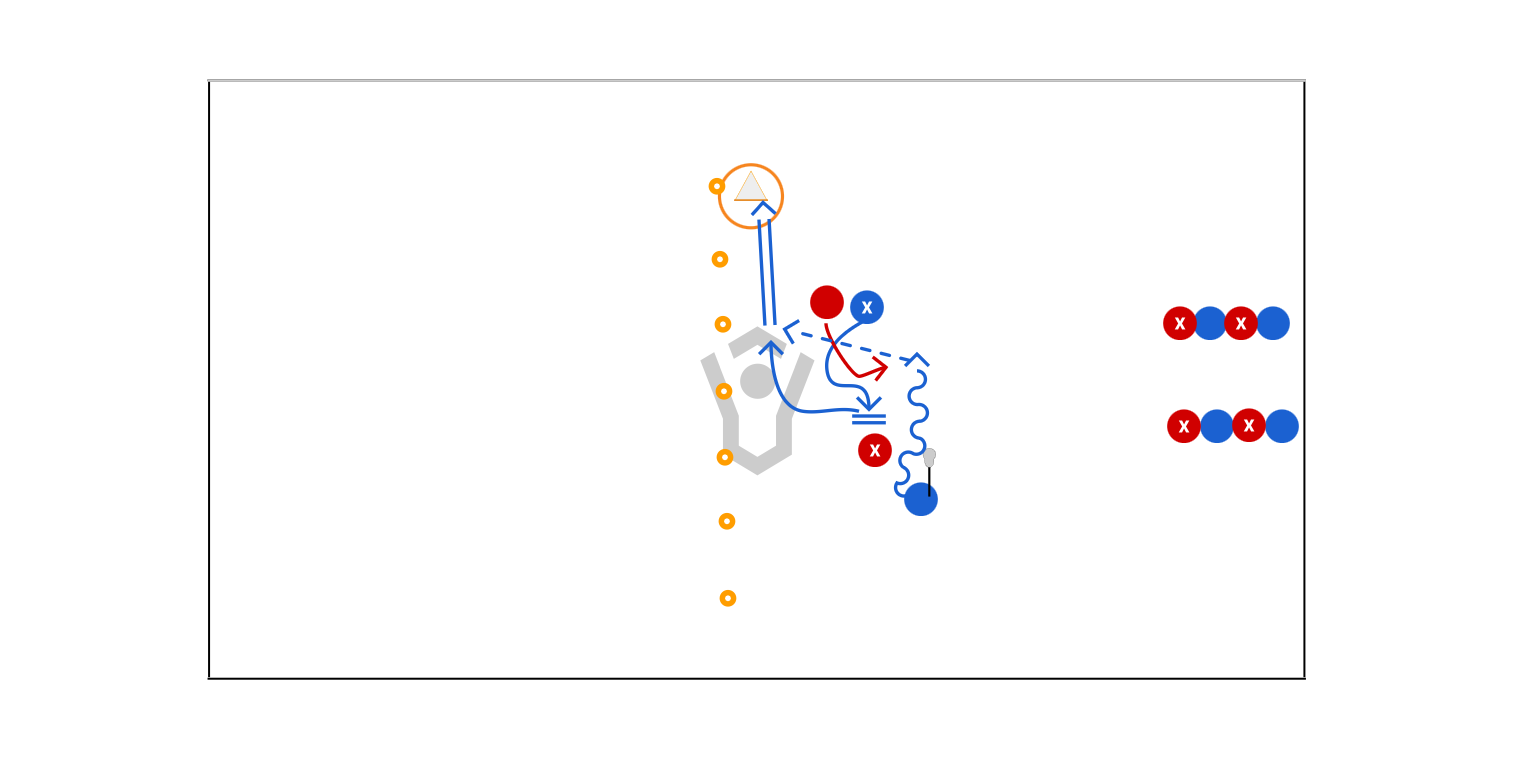
Full-Field Sixes Scramble Game
A fun and competitive game that builds in conditioning!
Set Up
Use your full field, and split your players into two teams. There is a coach in the middle of the field with balls. Start with a live 5v5 on 1 side, and on the dead ball or turnover, coach rolls a new ball in. The team that gets the GB must go and play offense. Continue for 90 second shifts and then sub
Coaching Points & Principles
- Play through fatigue
- Communicate
- Find the advantages
Progressions
- Younger players can play on smaller field
- Add in shot clocks
- Add extra points for certain outcomes
- Score off a pick
- Defense pass knock down or intercept
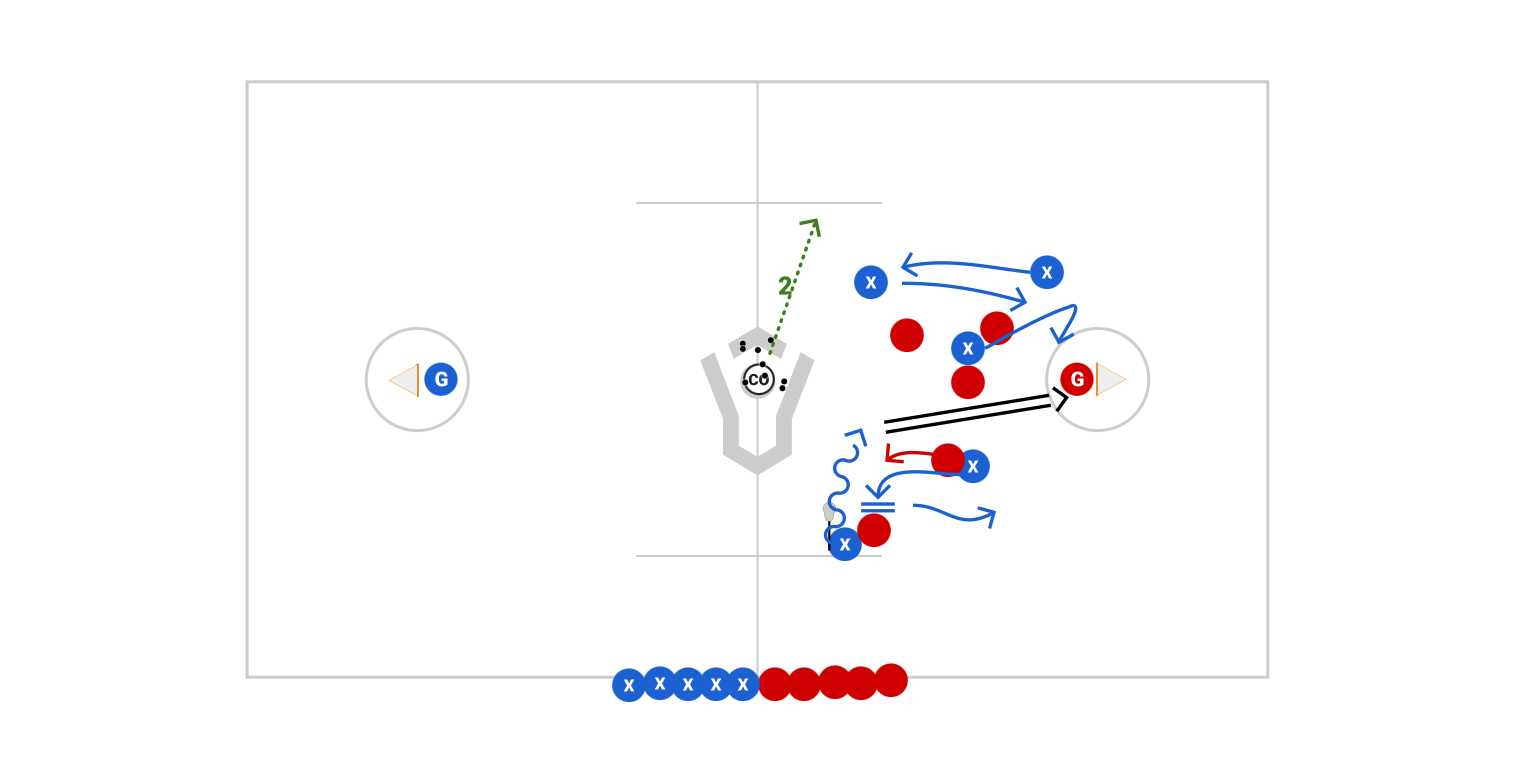
Defense Matchup Scramble
A great drill that forces the defense to rotate and communicate, and offense finding the quick advantages
Set Up
On 1 half the field, set up 5 cones on the perimeter. Start and offensive player at each cone, and place 5 defenders inside the house area. Coach will have balls out in space and will start the drill buy throwing a ball to 1 offensive player. The game is now live, and the matching defender must run around the cone from where the ball left from, and the off ball defense must slide to support the attacking player. The off ball offense should try to find open space and move the ball quick enough to get an open shot.
- Defense gets 1 point for stopping the offense and getting them back to neutral
- Defense gets 2 points if they are able to turn the ball Over and clear it successfully.
- Offense gets 1 point for scoring with the advantage
Coaching Points & principles
- Defense must slide and rotate to stop the advantage
- Communicate through the rotations
- Off ball sticks up, disrupt passing lanes
- Offense should find the advantage and move the ball quickly
Progressions
- Youngers players play 5v4 or smaller numbers like 4v4 or 3v3
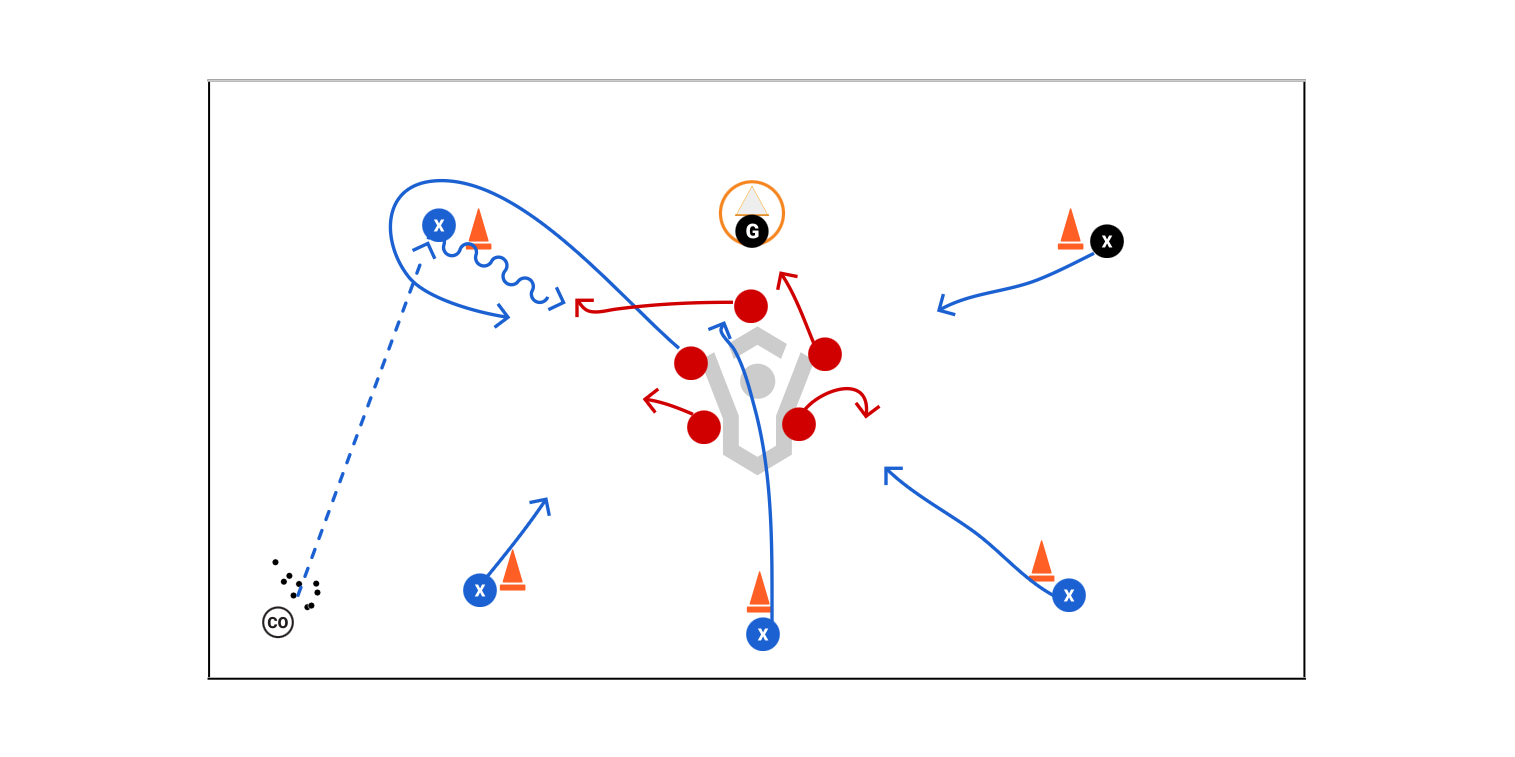
Double Corner Shooting
A shooting drill that works on outside and inside finishes – with off ball cuts
Set Up
Put a goalie in net, and put a line with balls on low GLE and another like on opposite high wing. Put some cones about 10 yards away from the goal that the top shooter has to shoot from. Start with the low GLE carry upfield and diagonal player banana cutting to the ball. They will receive a pass and shoot on the run getting down hill. The second player in line up top will carry and make a pass to the original low GLE player who will then get an inside finish. The 2nd player in line at GLE will then follow and make a pass to the 2 top corner and the flow keeps repeating
Coaching Points & Principles
- Passing while feet are moving – no flat footed
- Off ball cuts – Flash to the ball with stick up providing a target
- Shooting on the run – Getting down hill and driving to the cage
- Inside finishing – Add in fakes & Deceptions
- GO AT A PACE THAT ALLOWS THE GOALIE TO GET RESET AFTER EVERY SHOT
Progressions
- Younger players, shorten the passes/shooting areas
- Use cones for guidance with less experienced players
- Add Trailers for high level players
Arc 33 Game
SET UP
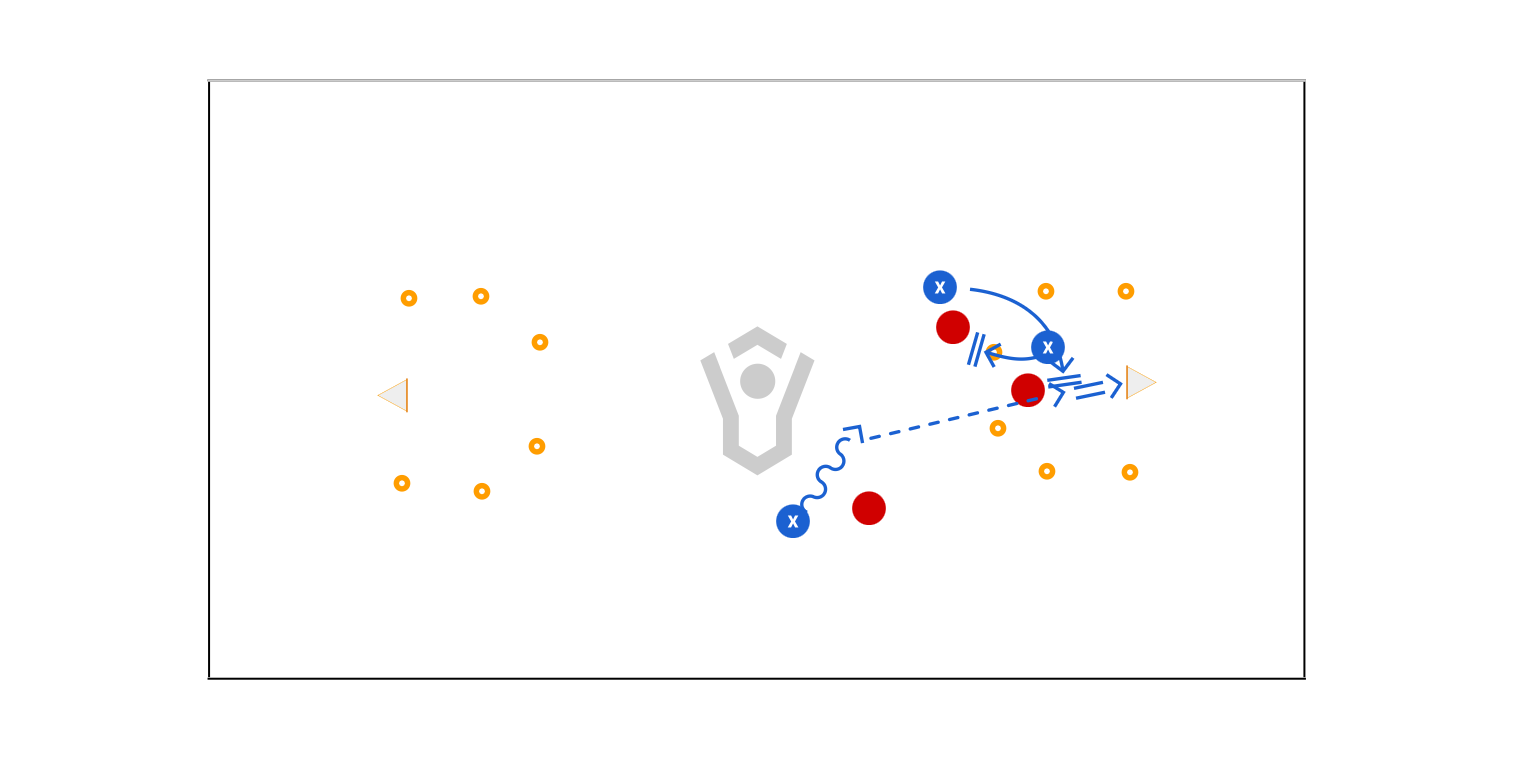
Set up in front of the cage an arc using cones, that is about 10 yards away from the goal. Start in a 3v3, but you can build up to 6v6. The rules of the game are as followed
- The offense can only score inside the arc OR
- Outside the arc in any fashion
- Play for 15 seconds reps
- Flip teams after every rep, keep score
PRINCIPLES & COACHING POINTS
- Encourages off ball play, to get open inside the arc.. use backdoor cuts, picks, etc..
- Defense must communicate through off ball ball play to protect the HOUSE
- Use point system to encourage certain typer of goals (2 points inside the arc / 1 Outside)
PROGRESSIONS
- Add in Constraints/rules like must pick off or on ball
- Build up to 4v4, 5v5 – Makes it harder for offense as it’s more crowded inside.
4v2 w/ Hammer Picks
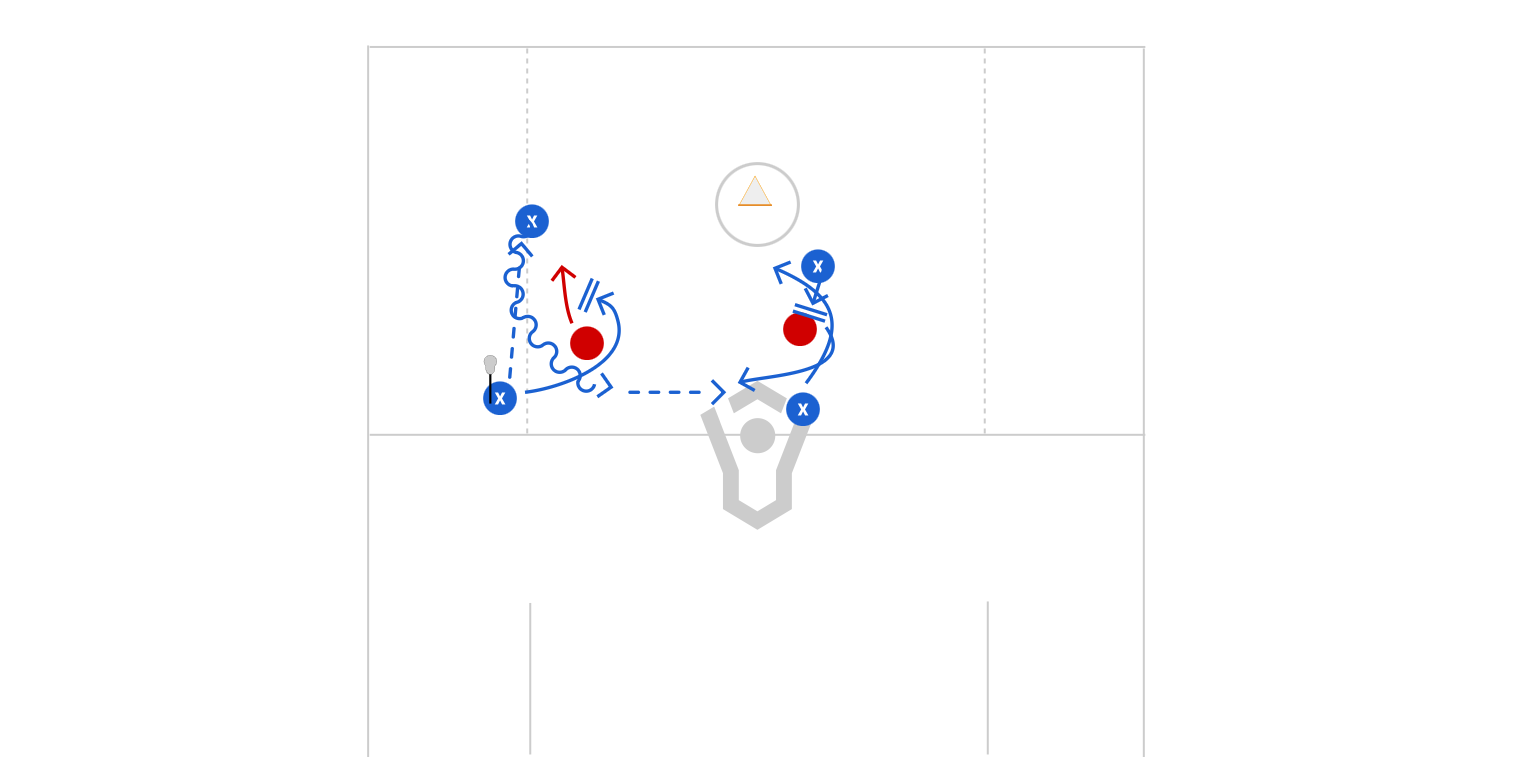
An uneven off ball game that emphasizes movement and spacing designed by Jim Mitchell of Princeton Lacrosse
Set Up
put a 2v1 on both sides of the field. 1 Side will start with the ball and an action, like pass down pick down, etc.. The off ball offense will execute a Hammer pick (Upfield Pick) and try to get their hands free. The team that initiated must make a pass to the off ball teammates, and then its a live 4v2
Coaching Points and Principles
- Picks – working on angles and deception to execute picks and off ball screens
- Timing – Make sure the off ball team is timing it up on knowing when to try and run the Hammer
Progressions
- Add more defense to make it all even
- Use longpole defense
- Play 3v2 or 4v3 both sides
Final Thought
The best Sixes teams are not always the teams with the best athletes — they are often the teams that:
- Communicate fastest
- Recover fastest
- Make simple decisions quickly
- Understand spacing
- Compete consistently under pressure
Build practices that create adaptable players rather than players dependent on rigid systems, and your Sixes development will accelerate dramatically.