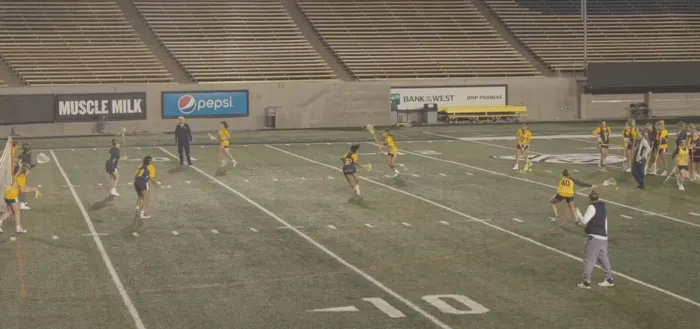
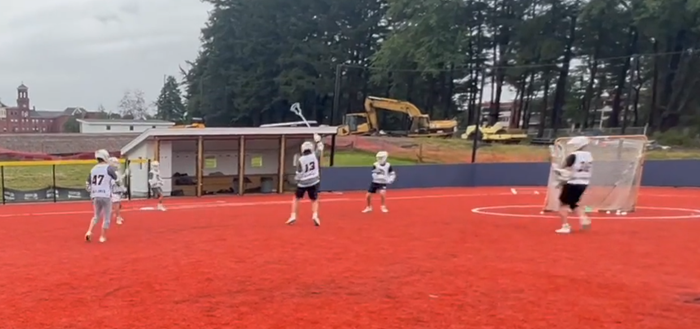
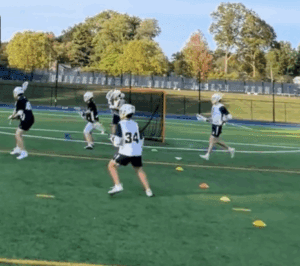
4v3 lacrosse drills place players in uneven situations where quick thinking is essential. Offensively, players must read the defense, identify open lanes, and decide when to pass, cut, or shoot. Defensively, players work on rotations, communication, and positioning to counter numerical disadvantages. Repeated practice in these drills strengthens mental processing and game intelligence, enabling players to make faster and more effective decisions during full-field games.
Practicing 4v3 small-sided games enhances both individual and team skills. Players gain more touches on the ball, improve passing accuracy, and develop off-ball movement. These drills also teach spacing, timing, and anticipation, while helping defenders practice rotations, slides, and communication. By simulating realistic game scenarios, athletes build confidence and adaptability, which translates to better performance in competitive matches.
Coaches can implement 4v3 drills as warm-ups, station work, or mini-games during practice. Rotating players ensures exposure to both offensive and defensive roles. Coaches should provide feedback on spacing, decision-making, and communication. Adjusting field size or rules can target specific skills, and encouraging reflection on choices during the drill enhances lacrosse IQ, making players more strategic in real-game situations.
4v3 lacrosse drills develop a wide range of skills, including passing accuracy, off-ball movement, decision-making, defensive rotations, and communication. Players also learn to exploit numerical advantages or defend under pressure, which improves tactical awareness. These drills reinforce teamwork, critical thinking, and quick reaction times, all essential for success in high-level lacrosse play.