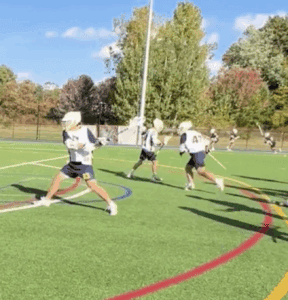
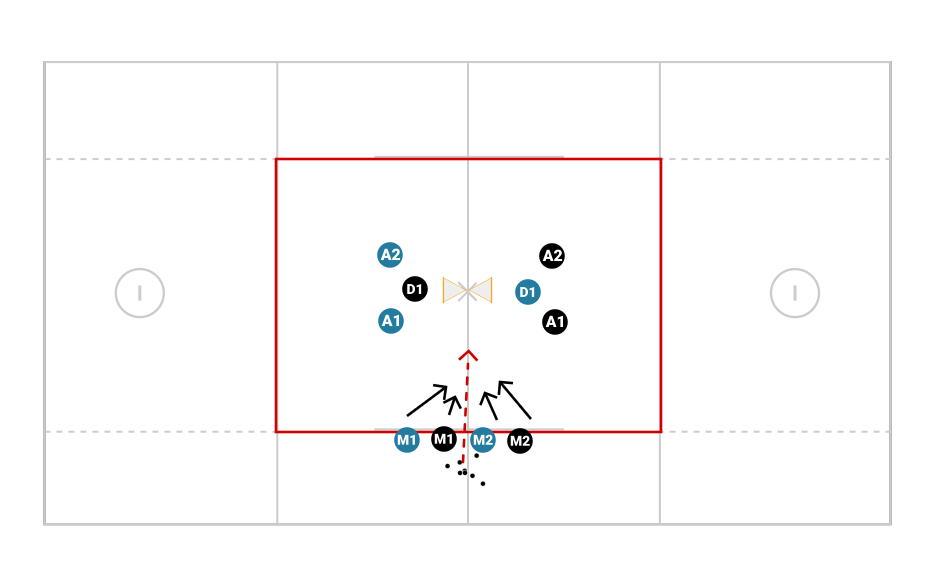
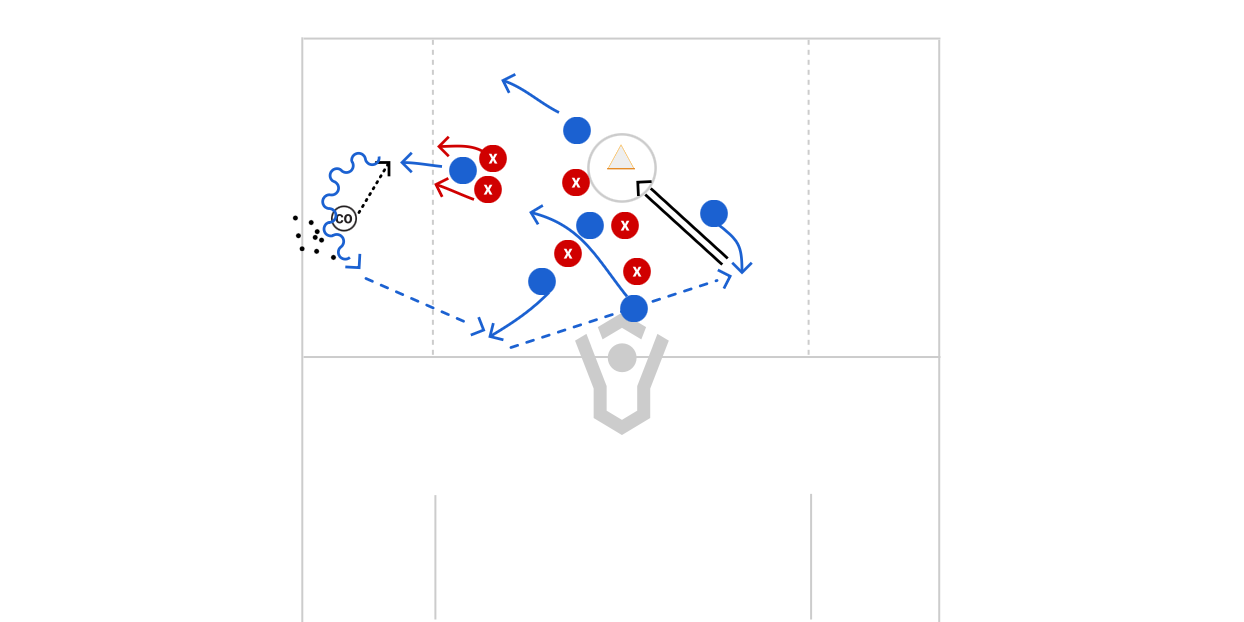
College lacrosse is faster, more physical, and more demanding than any previous level of play. Players are expected to execute skills at full speed while processing information, communicating with teammates, and reacting to constant pressure. These college lacrosse drills are designed to help athletes adapt to that environment by improving execution, awareness, and consistency under game-like conditions.
Whether you are a current college player, a high school athlete preparing for the next level, or a coach designing competitive practices, training must reflect the pace and intensity of real games. Drills at this level should challenge decision-making, reward efficiency, and reinforce habits that translate directly to competition.
College drills are built around speed, contact, and decision-making. Players are rarely standing still, and every rep demands awareness of spacing, timing, and support. The goal is not just repetition, but repetition under pressure.
Effective college lacrosse drills target multiple skills at once. Instead of isolating one movement, drills should force players to read the field, communicate, and execute while fatigued.
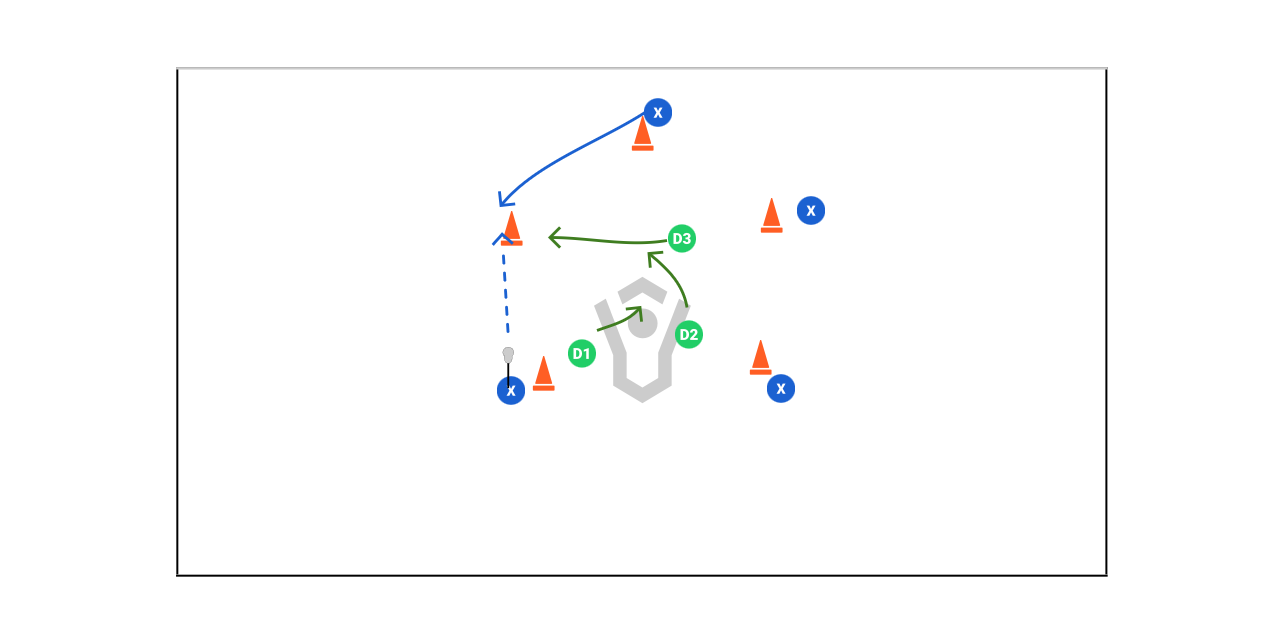
At the college level, defensive mistakes are punished immediately. Drills that emphasize defensive footwork and stickwork help defenders stay balanced, recover quickly, and protect the middle.
Transition moments often decide college games. Drills that include clearing strategies and unsettled play teach players how to convert defensive stops into offensive advantages.
College teams rely on constant communication to stay organized. Drills that reinforce communication and shared responsibilities help units move together rather than reacting individually.
College practices are demanding by design. Players are expected to handle longer sessions, higher intensity, and physical contact while maintaining technique. Conditioning is often built directly into drills rather than separated into isolated running.
To prepare properly, drills should be competitive, timed, and scored whenever possible. Adding consequences for mistakes or rewards for execution mirrors the pressure of real games and sharpens focus. Over time, this approach improves lacrosse IQ by forcing players to recognize patterns and make faster decisions.
The biggest adjustment players face at the college level is speed. The game moves faster, decisions happen earlier, and mistakes are punished more quickly. College lacrosse drills that reflect these realities help players build confidence by experiencing those demands in practice.
By consistently training at game speed and emphasizing team concepts, players develop habits that carry over into competition. The result is a team that plays faster, communicates better, and executes with confidence when it matters most.
College lacrosse drills are designed around speed, physical contact, and decision-making under pressure. Players have less time and space, so drills must simulate real-game tempo and defensive pressure. Instead of isolated skills, college drills combine passing, movement, communication, and finishing into single sequences that mirror competition.
Both are important, but team concepts are emphasized heavily at the college level. Drills reinforce spacing, communication, and trust so players understand how their decisions affect the entire unit. Concepts from team defense and team offense are often layered into every rep.
Most college programs incorporate high-intensity drills into every practice, adjusting volume based on the season. Early in the week, drills may be longer and more physical. Later in the week, intensity remains high but reps are shorter and more focused. This approach keeps players sharp without overloading them physically.